%20%20--%3E%0A%3Csvg%20version%3D%221.1%22%20xmlns%3D%22http%3A%2F%2Fwww.w3.org%2F2000%2Fsvg%22%20xmlns%3Axlink%3D%22http%3A%2F%2Fwww.w3.org%2F1999%2Fxlink%22%20x%3D%220px%22%20y%3D%220px%22%0A%09%20viewBox%3D%220%200%201294.2%20200%22%20style%3D%22enable-background%3Anew%200%200%201294.2%20200%3B%22%20xml%3Aspace%3D%22preserve%22%3E%0A%3Cstyle%20type%3D%22text%2Fcss%22%3E%0A%09.st0%7Bfill%3A%23CC0934%3B%7D%0A%09.st1%7Bfill%3A%23231F20%3B%7D%0A%09.st2%7Bfill%3A%23FFFFFF%3B%7D%0A%3C%2Fstyle%3E%0A%3Cg%20id%3D%22Template%22%3E%0A%09%3Cg%3E%0A%09%09%3Cpath%20class%3D%22st1%22%20d%3D%22M89.6%2C0H24.8L14.2%2C22.7h9.1L0%2C154.8h62.3c5.3-4.5%2C8.2-7%2C13.5-11.5l8.6-48.5c-3.7-4.5-5.7-7-9.4-11.4h0l0%2C0%0A%09%09%09c5-5.5%2C8.9-9.7%2C14.2-15.4l10-56.5C95.4%2C7%2C93.3%2C4.5%2C89.6%2C0z%20M54.6%2C132.2H27.1l6.5-36.8l28.9-8.4L54.6%2C132.2z%20M66.8%2C63.2l-28.9%2C8.4%0A%09%09%09l8.6-48.9h27.5L66.8%2C63.2z%22%2F%3E%0A%09%09%3Cpolygon%20class%3D%22st1%22%20points%3D%22139.8%2C0%20114.1%2C0%20103.5%2C22.7%20112.6%2C22.7%2089.3%2C154.8%20155.5%2C154.8%20159.4%2C132.2%20116.5%2C132.2%20%09%09%22%2F%3E%0A%09%09%3Cpath%20class%3D%22st1%22%20d%3D%22M260.6%2C0h-64.9l-10.6%2C22.7h9.1L173%2C143.4c3.7%2C4.5%2C5.7%2C7%2C9.4%2C11.5h50.9c5.3-4.5%2C8.2-7%2C13.5-11.5l23.3-131.9%0A%09%09%09C266.4%2C7%2C264.3%2C4.5%2C260.6%2C0z%20M225.6%2C132.2h-27.5l19.3-109.5h27.5L225.6%2C132.2z%22%2F%3E%0A%09%09%3Cpath%20class%3D%22st1%22%20d%3D%22M350.1%2C0h-64.9l-10.6%2C22.7h9.1l-21.3%2C120.7c3.7%2C4.5%2C5.7%2C7%2C9.4%2C11.5h50.9c5.3-4.5%2C8.2-7%2C13.5-11.5l13.6-77.3%0A%09%09%09h-37.7l-4%2C22.7h14.6l-7.7%2C43.4h-27.5L307%2C22.7h27.5l-3.3%2C18.6h23.1l5.3-29.9C355.9%2C7%2C353.8%2C4.5%2C350.1%2C0z%22%2F%3E%0A%09%09%3Cpath%20class%3D%22st2%22%20d%3D%22M400.7%2C0l-10.6%2C22.7h9.1l-23.3%2C132.1h23.2l10.5-59.5l16.8-4.9l0.2%2C64.4h23.1l-0.2-71l1.4-0.4%0A%09%09%09c5-5.5%2C8.9-9.7%2C14.2-15.4l10-56.5c-3.7-4.5-5.7-7-9.4-11.4H400.7z%20M442.7%2C63.2l-28.9%2C8.4l8.6-48.9h27.5L442.7%2C63.2z%22%2F%3E%0A%09%09%3Cpolygon%20class%3D%22st2%22%20points%3D%22479.4%2C22.7%20488.6%2C22.7%20465.2%2C154.8%20531.4%2C154.8%20535.4%2C132.2%20492.4%2C132.2%20500.1%2C88.7%20543%2C88.7%20%0A%09%09%09547%2C66.1%20504%2C66.1%20511.7%2C22.7%20554.7%2C22.7%20558.7%2C0%20490%2C0%20%09%09%22%2F%3E%0A%09%09%3Cpath%20class%3D%22st2%22%20d%3D%22M636.6%2C0h-64.9l-10.6%2C22.7h9.1l-23.3%2C132.1h62.3c5.3-4.5%2C8.2-7%2C13.5-11.5L646%2C11.4C642.3%2C7%2C640.2%2C4.5%2C636.6%2C0%0A%09%09%09z%20M601.5%2C132.2h-27.5l19.3-109.5h27.5L601.5%2C132.2z%22%2F%3E%0A%09%09%3Cpolygon%20class%3D%22st2%22%20points%3D%22717.9%2C100.9%20716.2%2C0%20686.7%2C0%20676.1%2C22.7%20685.2%2C22.7%20661.9%2C154.8%20685.1%2C154.8%20696.7%2C88.9%20700.6%2C154.8%20%0A%09%09%09716.1%2C154.8%20743.3%2C88.7%20731.6%2C154.8%20754.8%2C154.8%20782.1%2C0%20755.1%2C0%20%09%09%22%2F%3E%0A%09%09%3Cpath%20class%3D%22st2%22%20d%3D%22M840.2%2C0h-44.5l-10.6%2C22.7h9.1l0%2C0l-33.1%2C132.2h23.2l12.3-49.2l20.8-6l-5.7%2C55.2H835l14.8-144.2%0A%09%09%09C846.1%2C6.5%2C843.9%2C4.1%2C840.2%2C0z%20M802.8%2C81.4l14.7-58.7h7.9l-5.5%2C53.8L802.8%2C81.4z%22%2F%3E%0A%09%09%3Cpath%20class%3D%22st2%22%20d%3D%22M905.2%2C132.2h-27.5L897%2C22.7h27.5l-3.3%2C18.6h23.1l5.3-29.9c-3.7-4.5-5.7-7-9.4-11.4h-64.8l-10.6%2C22.7h9.1%0A%09%09%09l-21.3%2C120.7c3.7%2C4.5%2C5.7%2C7%2C9.4%2C11.4h50.9c5.3-4.5%2C8.2-7%2C13.5-11.4l5.3-29.9h-23.1L905.2%2C132.2z%22%2F%3E%0A%09%09%3Cpolygon%20class%3D%22st2%22%20points%3D%221006.6%2C63.2%20977.7%2C71.6%20990.3%2C0%20964.6%2C0%20954.1%2C22.7%20963.2%2C22.7%20939.9%2C154.8%20963%2C154.8%20973.5%2C95.3%20%0A%09%09%091002.5%2C86.9%20990.5%2C154.8%201013.6%2C154.8%201040.9%2C0%201017.8%2C0%20%09%09%22%2F%3E%0A%09%09%3Cpolygon%20class%3D%22st2%22%20points%3D%221043.4%2C22.7%201052.5%2C22.7%201029.2%2C154.8%201052.4%2C154.8%201079.7%2C0%201054%2C0%20%09%09%22%2F%3E%0A%09%09%3Cpolygon%20class%3D%22st2%22%20points%3D%221129.3%2C92.8%201122.1%2C0%201092.6%2C0%201082%2C22.7%201091.1%2C22.7%201067.8%2C154.8%201091%2C154.8%201107.3%2C62%20%0A%09%09%091114.6%2C154.8%201141.6%2C154.8%201168.9%2C0%201145.7%2C0%20%09%09%22%2F%3E%0A%09%09%3Cpolygon%20class%3D%22st2%22%20points%3D%221246.6%2C22.7%201250.6%2C0%201181.9%2C0%201171.3%2C22.7%201180.4%2C22.7%201157.1%2C154.8%201223.3%2C154.8%201227.2%2C132.2%20%0A%09%09%091184.3%2C132.2%201191.9%2C88.7%201234.9%2C88.7%201238.9%2C66.1%201195.9%2C66.1%201203.6%2C22.7%20%09%09%22%2F%3E%0A%09%09%3Cpolygon%20class%3D%22st1%22%20points%3D%221272.1%2C9.1%201242.5%2C176.8%203.7%2C176.8%206.1%2C199.8%201238.4%2C200%201250.1%2C200%201263.6%2C188.5%201294.2%2C15.2%20%09%09%22%2F%3E%0A%09%3C%2Fg%3E%0A%3C%2Fg%3E%0A%3Cg%20id%3D%22Layer_2%22%3E%0A%3C%2Fg%3E%0A%3C%2Fsvg%3E%0A)

One way the Cincinnati Reds have fallen behind their small-market peers has been their unwillingness to dole out long-term extensions to key young players on the cheap. The Milwaukee Brewers, for example, gave both Cooper Pratt and Luis Lara long-term extensions this year before either player established themselves at the major league level. As a result, both players are signed to bargain-basement deals.
Even when the Reds hand out extensions, they don't do so in a way where they extract maximum value. That was the case with Hunter Greene, whose injury track record dating back to his days in the low minors should have told Cincinnati that he was a risky bet.
The question of value can also be brought up with Chase Burns' extension. All said and done, the Reds' pact with the burgeoning ace is still a value at seven years and $105 million, but by waiting for him to prove he was an ace in the bigs, they paid more than they needed to.
While striking early is one way to generate maximum savings, there's another path a club can take to extract the most possible value. The way to do that would be to take a player who has previously performed but is coming off a down year and bet on him to return to form moving forward. No Reds player fits that bill better than Andrew Abbott.
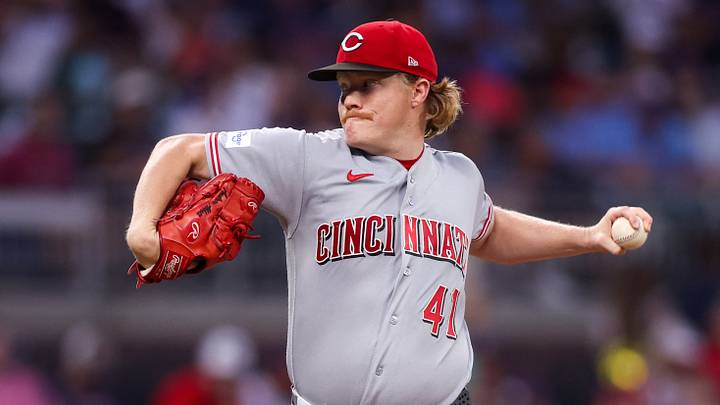
The Reds would be wise to parlay Andrew Abbott's subpar 2026 into a below-market contract extension
Heading into the 2026 season, there were some who considered Abbott to be a rising ace. The 2021 second-round pick was coming off a 2025 season in which he established himself as one of the game's best control artists, walking just 6.3% of batters while posting a roughly league-average 21.8% strikeout rate. In addition to that base, the southpaw excelled at generating soft contact, posting a 93rd percentile hard-hit rate (33.7%) and an 84th percentile average exit velocity (87.8 miles per hour).
All of that coalesced into a 2.87 ERA, and while peripherals like FIP (3.66) and xERA (3.55) didn't quite agree with the sterling ERA number, they were still front-end rotation-worthy performances in their own right.
The 2026 season didn't go the same way for the 27-year-old. Abbott saw his walk rate and his strikeout rate decline. He got hit much harder and developed a real home run problem, posting 1.41 HR/9. The end result was a 4.61 ERA over 32 starts and 166 innings. However, there are a few silver linings that we can pull from that give hope that a bounce back is in order.
First, there was the uneven nature of the 2026 campaign for Abbott. After a superb Opening Day performance, the lefty struggled through the rest of the season's first month, posting a 5.97 ERA. However, he turned a corner from May 1 through July 31, tossing 82⅓ innings over 15 starts and pitching to a 2.95 ERA. He'd unfortunately run out of gas down the stretch, but for nearly half the season he did look like the Abbott of old.
The home runs are of particular concern for the University of Virginia product, especially playing his home games in the extremely dinger-friendly Great American Ball Park. However, things didn't actually play out how you might have expected. Abbott allowed just nine homers and a .369 slugging percentage at home, in comparison to 17 homers and a .484 SLG on the road.
Here's another interesting nugget. In 2025, Abbott turned in 11 quality starts. In 2026, he actually recorded one more, coming in with 12 for the year. Now, a quality start is three earned runs or fewer over six innings, which is a 4.50 ERA. Not great shakes, but that's just the minimum threshold. What that tells us is that Abbott was often acceptable or better when he took the mound, but when he struggled it was because he really got shellacked. That just screams aberration.
Put all of this together, and it's reasonable to expect him to get back to his pre-2026 levels in 2027 and beyond. Entering his first year of arbitration, the Reds have the perfect opportunity to take his down year and solidify the discounted rate through the remaining three years of his team control and into a couple of his free-agent seasons. If they do that, they'll have a mid-rotation starter, at worst, on a team-friendly deal. If they wait for the rebound to happen, though, those savings will evaporate.
 Add us as a preferred source on Google