%20%20--%3E%0A%3Csvg%20version%3D%221.1%22%20xmlns%3D%22http%3A%2F%2Fwww.w3.org%2F2000%2Fsvg%22%20xmlns%3Axlink%3D%22http%3A%2F%2Fwww.w3.org%2F1999%2Fxlink%22%20x%3D%220px%22%20y%3D%220px%22%0A%09%20viewBox%3D%220%200%201294.2%20200%22%20style%3D%22enable-background%3Anew%200%200%201294.2%20200%3B%22%20xml%3Aspace%3D%22preserve%22%3E%0A%3Cstyle%20type%3D%22text%2Fcss%22%3E%0A%09.st0%7Bfill%3A%23CC0934%3B%7D%0A%09.st1%7Bfill%3A%23231F20%3B%7D%0A%09.st2%7Bfill%3A%23FFFFFF%3B%7D%0A%3C%2Fstyle%3E%0A%3Cg%20id%3D%22Template%22%3E%0A%09%3Cg%3E%0A%09%09%3Cpath%20class%3D%22st1%22%20d%3D%22M89.6%2C0H24.8L14.2%2C22.7h9.1L0%2C154.8h62.3c5.3-4.5%2C8.2-7%2C13.5-11.5l8.6-48.5c-3.7-4.5-5.7-7-9.4-11.4h0l0%2C0%0A%09%09%09c5-5.5%2C8.9-9.7%2C14.2-15.4l10-56.5C95.4%2C7%2C93.3%2C4.5%2C89.6%2C0z%20M54.6%2C132.2H27.1l6.5-36.8l28.9-8.4L54.6%2C132.2z%20M66.8%2C63.2l-28.9%2C8.4%0A%09%09%09l8.6-48.9h27.5L66.8%2C63.2z%22%2F%3E%0A%09%09%3Cpolygon%20class%3D%22st1%22%20points%3D%22139.8%2C0%20114.1%2C0%20103.5%2C22.7%20112.6%2C22.7%2089.3%2C154.8%20155.5%2C154.8%20159.4%2C132.2%20116.5%2C132.2%20%09%09%22%2F%3E%0A%09%09%3Cpath%20class%3D%22st1%22%20d%3D%22M260.6%2C0h-64.9l-10.6%2C22.7h9.1L173%2C143.4c3.7%2C4.5%2C5.7%2C7%2C9.4%2C11.5h50.9c5.3-4.5%2C8.2-7%2C13.5-11.5l23.3-131.9%0A%09%09%09C266.4%2C7%2C264.3%2C4.5%2C260.6%2C0z%20M225.6%2C132.2h-27.5l19.3-109.5h27.5L225.6%2C132.2z%22%2F%3E%0A%09%09%3Cpath%20class%3D%22st1%22%20d%3D%22M350.1%2C0h-64.9l-10.6%2C22.7h9.1l-21.3%2C120.7c3.7%2C4.5%2C5.7%2C7%2C9.4%2C11.5h50.9c5.3-4.5%2C8.2-7%2C13.5-11.5l13.6-77.3%0A%09%09%09h-37.7l-4%2C22.7h14.6l-7.7%2C43.4h-27.5L307%2C22.7h27.5l-3.3%2C18.6h23.1l5.3-29.9C355.9%2C7%2C353.8%2C4.5%2C350.1%2C0z%22%2F%3E%0A%09%09%3Cpath%20class%3D%22st2%22%20d%3D%22M400.7%2C0l-10.6%2C22.7h9.1l-23.3%2C132.1h23.2l10.5-59.5l16.8-4.9l0.2%2C64.4h23.1l-0.2-71l1.4-0.4%0A%09%09%09c5-5.5%2C8.9-9.7%2C14.2-15.4l10-56.5c-3.7-4.5-5.7-7-9.4-11.4H400.7z%20M442.7%2C63.2l-28.9%2C8.4l8.6-48.9h27.5L442.7%2C63.2z%22%2F%3E%0A%09%09%3Cpolygon%20class%3D%22st2%22%20points%3D%22479.4%2C22.7%20488.6%2C22.7%20465.2%2C154.8%20531.4%2C154.8%20535.4%2C132.2%20492.4%2C132.2%20500.1%2C88.7%20543%2C88.7%20%0A%09%09%09547%2C66.1%20504%2C66.1%20511.7%2C22.7%20554.7%2C22.7%20558.7%2C0%20490%2C0%20%09%09%22%2F%3E%0A%09%09%3Cpath%20class%3D%22st2%22%20d%3D%22M636.6%2C0h-64.9l-10.6%2C22.7h9.1l-23.3%2C132.1h62.3c5.3-4.5%2C8.2-7%2C13.5-11.5L646%2C11.4C642.3%2C7%2C640.2%2C4.5%2C636.6%2C0%0A%09%09%09z%20M601.5%2C132.2h-27.5l19.3-109.5h27.5L601.5%2C132.2z%22%2F%3E%0A%09%09%3Cpolygon%20class%3D%22st2%22%20points%3D%22717.9%2C100.9%20716.2%2C0%20686.7%2C0%20676.1%2C22.7%20685.2%2C22.7%20661.9%2C154.8%20685.1%2C154.8%20696.7%2C88.9%20700.6%2C154.8%20%0A%09%09%09716.1%2C154.8%20743.3%2C88.7%20731.6%2C154.8%20754.8%2C154.8%20782.1%2C0%20755.1%2C0%20%09%09%22%2F%3E%0A%09%09%3Cpath%20class%3D%22st2%22%20d%3D%22M840.2%2C0h-44.5l-10.6%2C22.7h9.1l0%2C0l-33.1%2C132.2h23.2l12.3-49.2l20.8-6l-5.7%2C55.2H835l14.8-144.2%0A%09%09%09C846.1%2C6.5%2C843.9%2C4.1%2C840.2%2C0z%20M802.8%2C81.4l14.7-58.7h7.9l-5.5%2C53.8L802.8%2C81.4z%22%2F%3E%0A%09%09%3Cpath%20class%3D%22st2%22%20d%3D%22M905.2%2C132.2h-27.5L897%2C22.7h27.5l-3.3%2C18.6h23.1l5.3-29.9c-3.7-4.5-5.7-7-9.4-11.4h-64.8l-10.6%2C22.7h9.1%0A%09%09%09l-21.3%2C120.7c3.7%2C4.5%2C5.7%2C7%2C9.4%2C11.4h50.9c5.3-4.5%2C8.2-7%2C13.5-11.4l5.3-29.9h-23.1L905.2%2C132.2z%22%2F%3E%0A%09%09%3Cpolygon%20class%3D%22st2%22%20points%3D%221006.6%2C63.2%20977.7%2C71.6%20990.3%2C0%20964.6%2C0%20954.1%2C22.7%20963.2%2C22.7%20939.9%2C154.8%20963%2C154.8%20973.5%2C95.3%20%0A%09%09%091002.5%2C86.9%20990.5%2C154.8%201013.6%2C154.8%201040.9%2C0%201017.8%2C0%20%09%09%22%2F%3E%0A%09%09%3Cpolygon%20class%3D%22st2%22%20points%3D%221043.4%2C22.7%201052.5%2C22.7%201029.2%2C154.8%201052.4%2C154.8%201079.7%2C0%201054%2C0%20%09%09%22%2F%3E%0A%09%09%3Cpolygon%20class%3D%22st2%22%20points%3D%221129.3%2C92.8%201122.1%2C0%201092.6%2C0%201082%2C22.7%201091.1%2C22.7%201067.8%2C154.8%201091%2C154.8%201107.3%2C62%20%0A%09%09%091114.6%2C154.8%201141.6%2C154.8%201168.9%2C0%201145.7%2C0%20%09%09%22%2F%3E%0A%09%09%3Cpolygon%20class%3D%22st2%22%20points%3D%221246.6%2C22.7%201250.6%2C0%201181.9%2C0%201171.3%2C22.7%201180.4%2C22.7%201157.1%2C154.8%201223.3%2C154.8%201227.2%2C132.2%20%0A%09%09%091184.3%2C132.2%201191.9%2C88.7%201234.9%2C88.7%201238.9%2C66.1%201195.9%2C66.1%201203.6%2C22.7%20%09%09%22%2F%3E%0A%09%09%3Cpolygon%20class%3D%22st1%22%20points%3D%221272.1%2C9.1%201242.5%2C176.8%203.7%2C176.8%206.1%2C199.8%201238.4%2C200%201250.1%2C200%201263.6%2C188.5%201294.2%2C15.2%20%09%09%22%2F%3E%0A%09%3C%2Fg%3E%0A%3C%2Fg%3E%0A%3Cg%20id%3D%22Layer_2%22%3E%0A%3C%2Fg%3E%0A%3C%2Fsvg%3E%0A)

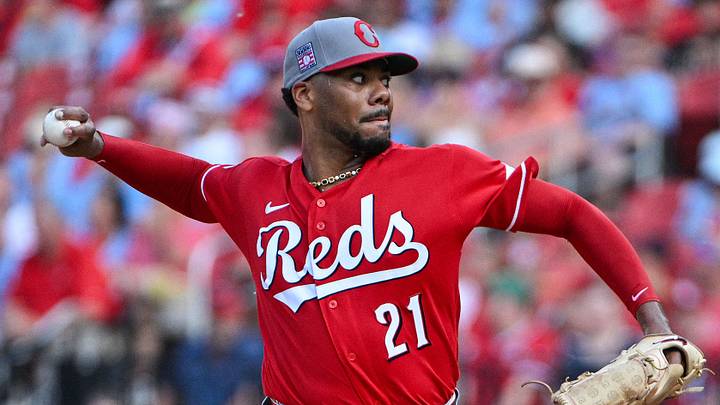
Hunter Greene's 2026 season is done. Depending on the fallout from his upcoming elbow surgery (and the impending MLB lockout) the Cincinnati Reds starter might not return to the mound until 2028.
Greene reported elbow discomfort to the Reds' coaching staff last Tuesday, and after undergoing an MRI, was placed on the 15-day injured list. He then flew out to Los Angeles to seek a second opinion from Dr. Neal ElAttrache, and it was discovered that he has a partially torn ligament in his right elbow. He'll have season-ending surgery next week, but the timeline for his return is still unknown.
There were whispers of a potential trade involving Greene prior to the August 3 deadline — with the Boston Red Sox emerging as a possible suitor — but those talks didn't go anywhere. A day after the trade deadline passed, Greene found himself on the IL (again).
Some casual observers (especially the internet sleuths online) might presume that rival GMs are sure to have some questions for the Reds' front office. Considering their rumored interest in moving Greene at the deadline, some have posed the question: What did the Reds know and when did they know it?
That's a fair question, but it's the wrong subject. The correct question would be: What did Greene know and when did he know it?
According to Reds manager Terry Francona, Greene assumed he was pitching through discomfort associated to the arthroscopic elbow procedure he underwent in March. Cincinnati's skipper informed RedsTV reporter Brian Giesenschlag that once he and the training staff were made aware of the situation, they shut Greene down from throwing and sent him for an MRI.
“I’m really glad we did that because he didn’t want to," Francona told Giesenschlag. "Because I get it. He wanted to pitch.”
Reds president of baseball operations Nick Krall echoed those sentiments, telling reporters, “He said he was sore off and on for a couple of weeks. At the same time, it wasn’t something he brought to anyone’s attention because he thought it was just, ‘Hey, you’re coming off the bone chip surgery. You’re just going to push through it.’”
Based on those comments, the Reds didn't know a darn thing. Why? Because Greene was concealing the injury. Sound familiar? Back in early March, similar comments from Francona piqued the interest of Reds fans after it was announced that Greene needed surgery to remove bone chips from his right elbow.
Greene admitted that he was battling elbow discomfort during the final month of the 2025 season. He also receive a platelet rich-plasma (PRP) injection back in October, but the neither the Reds nor Greene ever made that information public until it was announced in March that he was undergoing surgery.
“He never told me (directly) any of that,”Francona told Cincinnati reporter Charlie Goldsmith. “I know he has mentioned it to (pitching coach Derek Johnson). He was always telling me he was good. I liked the way he was pitching. The trainers, we’re never going to send somebody out there if they shouldn’t pitch or play. Ever.”
Reds need to stop waiting for Hunter Greene’s trade value to rebound
This is a mess, and it only highlights the rift that Reds fans know exists between Greene and the front office and/or coaching staff. There've been enough stories leaked to the local media over the last year-and-a-half to know that the relationship between Green and the Reds' organization is fractured.
As such, the Reds need to trade Greene while he still has some sort of value remaining. This latest injury will undoubtedly hurt his trade value, but that's irrelevant at this point. Cincinnati needs to bite the bullet, get whatever they can in return, and call it a day.
This long, drawn-out drama between the organization and their best pitcher is only going to become more contentious as he gets closer and closer to free agency.
Greene is under contract through the 2028 season with a $21 million club-option for 2029. In other words, the Reds owe the right-hander $52.6 million ($17.5 million AAV) over the next three seasons. That's a bargain for a pitcher of Greene's skillset — if he's available to pitch. If Greene's impending surgery forces him to miss all of next season, that number goes up to $26.3 million AAV.
Cincinnati cannot afford to tie up so much of their financial resources into such an unreliable player. If Greene's forced to miss all of 2027 because of an injury, they'll effectively be wasting $15.3 million. Furthermore, they have to offset the loss somehow; meaning they'll need to sign another starting pitcher. Or, as has been suggested, extend a qualifying offer to impending free agent Brady Singer.
Sometimes, a player becomes more trouble than they're worth, and that's the point the Reds have reached with Greene. When he's healthy, he's arguably one of the top-10 pitches in all of baseball. But he's averaged just 12 starts the past two seasons combined and has only eclipsed 150 innings pitched once in his entire Major League career.
Will the Reds ever get true market for Greene? No, not at all. But that's beside the point. Given the somewhat contentious nature of the relationship, his injury-riddled résumé, and the team's need to clear the books (even of such a team-friendly contract), it seems best if the two sides parted ways.
Will it acutally happen? Knowing the way the Reds do business, that seems unlikely. But if the results of Greene's upcoming surgery allow him to return to the mound sometime before the All-Star break next season, the odds of a trade suddenly seem more plausible. Reds fans will have to wait and see.
 Add us as a preferred source on Google