%20%20--%3E%0A%3Csvg%20version%3D%221.1%22%20xmlns%3D%22http%3A%2F%2Fwww.w3.org%2F2000%2Fsvg%22%20xmlns%3Axlink%3D%22http%3A%2F%2Fwww.w3.org%2F1999%2Fxlink%22%20x%3D%220px%22%20y%3D%220px%22%0A%09%20viewBox%3D%220%200%201294.2%20200%22%20style%3D%22enable-background%3Anew%200%200%201294.2%20200%3B%22%20xml%3Aspace%3D%22preserve%22%3E%0A%3Cstyle%20type%3D%22text%2Fcss%22%3E%0A%09.st0%7Bfill%3A%23CC0934%3B%7D%0A%09.st1%7Bfill%3A%23231F20%3B%7D%0A%09.st2%7Bfill%3A%23FFFFFF%3B%7D%0A%3C%2Fstyle%3E%0A%3Cg%20id%3D%22Template%22%3E%0A%09%3Cg%3E%0A%09%09%3Cpath%20class%3D%22st1%22%20d%3D%22M89.6%2C0H24.8L14.2%2C22.7h9.1L0%2C154.8h62.3c5.3-4.5%2C8.2-7%2C13.5-11.5l8.6-48.5c-3.7-4.5-5.7-7-9.4-11.4h0l0%2C0%0A%09%09%09c5-5.5%2C8.9-9.7%2C14.2-15.4l10-56.5C95.4%2C7%2C93.3%2C4.5%2C89.6%2C0z%20M54.6%2C132.2H27.1l6.5-36.8l28.9-8.4L54.6%2C132.2z%20M66.8%2C63.2l-28.9%2C8.4%0A%09%09%09l8.6-48.9h27.5L66.8%2C63.2z%22%2F%3E%0A%09%09%3Cpolygon%20class%3D%22st1%22%20points%3D%22139.8%2C0%20114.1%2C0%20103.5%2C22.7%20112.6%2C22.7%2089.3%2C154.8%20155.5%2C154.8%20159.4%2C132.2%20116.5%2C132.2%20%09%09%22%2F%3E%0A%09%09%3Cpath%20class%3D%22st1%22%20d%3D%22M260.6%2C0h-64.9l-10.6%2C22.7h9.1L173%2C143.4c3.7%2C4.5%2C5.7%2C7%2C9.4%2C11.5h50.9c5.3-4.5%2C8.2-7%2C13.5-11.5l23.3-131.9%0A%09%09%09C266.4%2C7%2C264.3%2C4.5%2C260.6%2C0z%20M225.6%2C132.2h-27.5l19.3-109.5h27.5L225.6%2C132.2z%22%2F%3E%0A%09%09%3Cpath%20class%3D%22st1%22%20d%3D%22M350.1%2C0h-64.9l-10.6%2C22.7h9.1l-21.3%2C120.7c3.7%2C4.5%2C5.7%2C7%2C9.4%2C11.5h50.9c5.3-4.5%2C8.2-7%2C13.5-11.5l13.6-77.3%0A%09%09%09h-37.7l-4%2C22.7h14.6l-7.7%2C43.4h-27.5L307%2C22.7h27.5l-3.3%2C18.6h23.1l5.3-29.9C355.9%2C7%2C353.8%2C4.5%2C350.1%2C0z%22%2F%3E%0A%09%09%3Cpath%20class%3D%22st2%22%20d%3D%22M400.7%2C0l-10.6%2C22.7h9.1l-23.3%2C132.1h23.2l10.5-59.5l16.8-4.9l0.2%2C64.4h23.1l-0.2-71l1.4-0.4%0A%09%09%09c5-5.5%2C8.9-9.7%2C14.2-15.4l10-56.5c-3.7-4.5-5.7-7-9.4-11.4H400.7z%20M442.7%2C63.2l-28.9%2C8.4l8.6-48.9h27.5L442.7%2C63.2z%22%2F%3E%0A%09%09%3Cpolygon%20class%3D%22st2%22%20points%3D%22479.4%2C22.7%20488.6%2C22.7%20465.2%2C154.8%20531.4%2C154.8%20535.4%2C132.2%20492.4%2C132.2%20500.1%2C88.7%20543%2C88.7%20%0A%09%09%09547%2C66.1%20504%2C66.1%20511.7%2C22.7%20554.7%2C22.7%20558.7%2C0%20490%2C0%20%09%09%22%2F%3E%0A%09%09%3Cpath%20class%3D%22st2%22%20d%3D%22M636.6%2C0h-64.9l-10.6%2C22.7h9.1l-23.3%2C132.1h62.3c5.3-4.5%2C8.2-7%2C13.5-11.5L646%2C11.4C642.3%2C7%2C640.2%2C4.5%2C636.6%2C0%0A%09%09%09z%20M601.5%2C132.2h-27.5l19.3-109.5h27.5L601.5%2C132.2z%22%2F%3E%0A%09%09%3Cpolygon%20class%3D%22st2%22%20points%3D%22717.9%2C100.9%20716.2%2C0%20686.7%2C0%20676.1%2C22.7%20685.2%2C22.7%20661.9%2C154.8%20685.1%2C154.8%20696.7%2C88.9%20700.6%2C154.8%20%0A%09%09%09716.1%2C154.8%20743.3%2C88.7%20731.6%2C154.8%20754.8%2C154.8%20782.1%2C0%20755.1%2C0%20%09%09%22%2F%3E%0A%09%09%3Cpath%20class%3D%22st2%22%20d%3D%22M840.2%2C0h-44.5l-10.6%2C22.7h9.1l0%2C0l-33.1%2C132.2h23.2l12.3-49.2l20.8-6l-5.7%2C55.2H835l14.8-144.2%0A%09%09%09C846.1%2C6.5%2C843.9%2C4.1%2C840.2%2C0z%20M802.8%2C81.4l14.7-58.7h7.9l-5.5%2C53.8L802.8%2C81.4z%22%2F%3E%0A%09%09%3Cpath%20class%3D%22st2%22%20d%3D%22M905.2%2C132.2h-27.5L897%2C22.7h27.5l-3.3%2C18.6h23.1l5.3-29.9c-3.7-4.5-5.7-7-9.4-11.4h-64.8l-10.6%2C22.7h9.1%0A%09%09%09l-21.3%2C120.7c3.7%2C4.5%2C5.7%2C7%2C9.4%2C11.4h50.9c5.3-4.5%2C8.2-7%2C13.5-11.4l5.3-29.9h-23.1L905.2%2C132.2z%22%2F%3E%0A%09%09%3Cpolygon%20class%3D%22st2%22%20points%3D%221006.6%2C63.2%20977.7%2C71.6%20990.3%2C0%20964.6%2C0%20954.1%2C22.7%20963.2%2C22.7%20939.9%2C154.8%20963%2C154.8%20973.5%2C95.3%20%0A%09%09%091002.5%2C86.9%20990.5%2C154.8%201013.6%2C154.8%201040.9%2C0%201017.8%2C0%20%09%09%22%2F%3E%0A%09%09%3Cpolygon%20class%3D%22st2%22%20points%3D%221043.4%2C22.7%201052.5%2C22.7%201029.2%2C154.8%201052.4%2C154.8%201079.7%2C0%201054%2C0%20%09%09%22%2F%3E%0A%09%09%3Cpolygon%20class%3D%22st2%22%20points%3D%221129.3%2C92.8%201122.1%2C0%201092.6%2C0%201082%2C22.7%201091.1%2C22.7%201067.8%2C154.8%201091%2C154.8%201107.3%2C62%20%0A%09%09%091114.6%2C154.8%201141.6%2C154.8%201168.9%2C0%201145.7%2C0%20%09%09%22%2F%3E%0A%09%09%3Cpolygon%20class%3D%22st2%22%20points%3D%221246.6%2C22.7%201250.6%2C0%201181.9%2C0%201171.3%2C22.7%201180.4%2C22.7%201157.1%2C154.8%201223.3%2C154.8%201227.2%2C132.2%20%0A%09%09%091184.3%2C132.2%201191.9%2C88.7%201234.9%2C88.7%201238.9%2C66.1%201195.9%2C66.1%201203.6%2C22.7%20%09%09%22%2F%3E%0A%09%09%3Cpolygon%20class%3D%22st1%22%20points%3D%221272.1%2C9.1%201242.5%2C176.8%203.7%2C176.8%206.1%2C199.8%201238.4%2C200%201250.1%2C200%201263.6%2C188.5%201294.2%2C15.2%20%09%09%22%2F%3E%0A%09%3C%2Fg%3E%0A%3C%2Fg%3E%0A%3Cg%20id%3D%22Layer_2%22%3E%0A%3C%2Fg%3E%0A%3C%2Fsvg%3E%0A)

With the GM Meetings in the rearview mirror, Major League Baseball teams have about three weeks to wrap up any all business before the impending lockout that's expected to close up operations on December 1. It's still early, but Cincinnati Reds have done little more than lose last year's closer, Emilio Pagán, to the Detroit Tigers. But all hope is not lost.
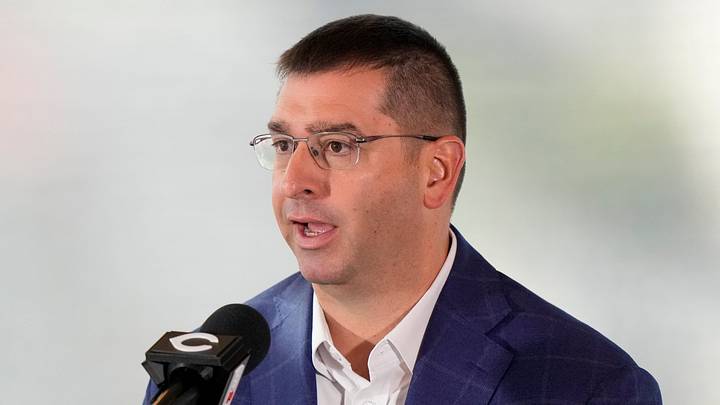
Though Reds' president of baseball operations Nick Krall undoubtedly has his work cut out for him this offseason, it's certainly possible to thread the needle, patch up the holes on the roster, and field a competitive team heading into 2027. Whether or not Reds' ownership gives Krall the resources (or permission) remains to be seen.
But let's see if we can't map out a blueprint for the next few weeks (and maybe even after the lockout is lifted) that would allow the Reds to make a surprising run next season.
First things first; let's assume that next year's budget will look somewhat similar to the Reds' 2026 payroll. According to FanGraphs, Cincinnati's 2026 estimated final payroll was $128 million, and they already have $91 million committed toward next season. That gives Krall and Co. about $37 million to play with. Now, let's look at the pieces that will almost certainly be part of next year's Opening Day roster.
- Elly De La Cruz, SS
- Sal Stewart, 1B/3B
- Chase Burns, RHP
- Jose Trevino, C
- Tony Santillan, RHP
- Dane Myers, OF
- Luis Mey, RHP
- Noelvi Marte, OF
- Nick Lodolo, LHP
- Andrew Abbott, LHP
- Ke'Bryan Hayes, 3B
- Oswaldo Cabrera, IF/OF
- Héctor Rodríguez, OF
- Matt McLain, 2B
- Graham Ashcraft, RHP
- JJ Bleday, OF
- Rhett Lowder, RHP
- Tejay Antone, RHP
We feel comfortable suggesting that these 18 players (if healthy) will be part of next year's Opening Day roster. Some names were left off intentionally (i.e. - Spencer Steer) and we'll get to them eventually. Others simply haven't proven enough to be a lock for next year's roster. That list would include players like Edwin Arroyo, Juan Brito, and Chase Petty.
Looking over that list, there are four infielders, one utility player, four outfielders, one catcher, four starters, and four relievers. By our count, that means the Reds would need to secure at least one more backstop, one (probably two) more starting pitchers, four relievers, and three more position players. Sheesh, that's a long list. Well, here goes nothing.
Nick Krall needs to address the Reds' starting rotation
The biggest (and most expensive need) this offseason will be the starting rotation. Cincinnati will be without Hunter Greene (elbow), but his $15.3 million salary will still count toward the bottom line. Finding a durable and effective starter to replace at least some of Greene's production is a must. Reds fans might not like this idea, but re-signing Brady Singer would be a wise investment.
Singer's second-half performance torpedoed any chance of him signing more than a one-year deal this offseason. Though most fans have probably forgotten, but there was 10-game stretch last season when Singer posted a 3.14 ERA with a 4.11 FIP and a 22.7% strikeout rate. If Cincinnati can get Singer to accept a one-year, $13 million deal with a team-option for 2028, they should take it.
But while Singer gives the Reds a dependable arm, they're going to need at least one more starter in order to piece together a formidable rotation. Former Chicago Cubs' starter David Peterson has the profile that's tailor made for pitching at Great American Ball Park, and could probably be had for about $11 million.
That $24 million investment brings the Reds' payroll up to $115 million, but gives Cincinnati a rotation of Peterson, Singer, Chase Burns, Nick Lodolo, and Andrew Abbott, with Rhett Lowder and Brandon Williamson on standby. The Reds also have young hurlers like Chase Petty and José Franco waiting in the wings.
Nick Krall must replace Tyler Stephenson, but not sacrifice the Reds' offense for defense
A reunion between the Reds and Tyler Stephenson isn't dead, but it's on life support. The longtime Reds' backstop will likely be able to sign a multi-year deal worth at least $10 million annually, and that's just too much money for Cincinnati to spend. Instead, the Reds should look to the trade market.
The San Diego Padres are said to be shopping two of their catchers — Freddy Fermin and Luis Campusano — and either one would be a nice fit behind the dish in Cincinnati. But given the Reds' need for some offensive firepower next season, Cincinnati should take Campusano over Fermin.
Campusano is projected to take home approximately $1.7 million through arbitration and has two years of team control remaining. What would San Diego want in return? Most sources suggest the Friars are looking for pitching. Maybe the Reds could persuade A.J. Preller to take on a reclamation project like Brandon Williamson — a former top pick who'd bring a left-handed presence to their right-handed heavy rotation.
Williamson's $1.3 million in estimated arbitration costs coming off the books would make their acquisition of Campusano a wash financially, and the Padres would lengthen their rotation heading into next season. It's a win-win, and Cincinnati still has about $13 million to spend.
Reds must bolster their bullpen, and trading Spencer Steer could be the key
Remember earlier when we didn't list Spencer Steer as part of the Reds' 2027 Opening Day lineup? This is why. If the Reds want to compete next season, Steer might be their most valuable trade asset.
While he's become a fan favorite in Cincinnati, he's getting more expensive (~$5 million salary in 2027), is coming off wrist surgery, and doesn't have a true position. Yes, losing Steer might hurt an already depleted Reds' lineup, but Krall and Co. have to leverage their assets as best they can.
The Seattle Mariners were said to be interested in Steer last summer, and had it not been for a wrist injury he suffered at the end of July, he may've been on his way to the Emerald City. Would Seattle be willing to package right-hander Matt Brash (and some other secondary pieces) for Steer? The Mariners' top reliever suffered a lat injury that ended his 2026 campaign prematurely, but still posted a 0.54 ERA through his first 20 appearances last season.
Brash is arbitration eligible for the first time this offseason, and is only expected to take home about $1.8 million. In his previous two seasons, the 28-year-old logged a combined 118 innings to the tune of a 2.82 ERA. If the Reds are looking for a backend stopper, Brash could be a good target.
A deal like this would add a high-leverage reliever and help Cincinnati to allow approximately $3 million from their payroll, bringing their total remaining budget to about $16 million.
Nick Krall can use the remainder of the budget to shore up the Reds' bullpen & the bench
No, $16 million won't buy you a lot in the current baseball economy. And while Krall has proven to be inept at numerous aspects of his job, he oftentimes has profound success when it comes to acquiring bargain-bin free agents on low-cost or minor-league deals. Names like Nathaniel Lowe, JJ Bleday, Buck Farmer, Tyler Naquin, and Scott Barlow come to mind.
The additions of Singer, Peterson, Campusano, and Brash, would've help to shore up the Reds' rotation, replaced Stephenson, and added a high-end reliever to the Cincinnati bullpen. Now Krall can use the remainder of the budget to find players who fit what he and Reds' manager Terry Francona are looking for.
Let's look at the bullpen first. Assuming Brash, Tony Santillan, Tejay Antone, and Graham Ashcraft are handling the backend, Cincinnati still needs some middle- relief options or pitchers who can give Francona multiple innings out of the 'pen. Former Reds' pitcher Brent Suter fits that model perfectly, and would also bring a left-handed presence to the relief corps.
Other veteran lefties like Keegan Akin, Matt Strahm, and Brooks Raley should be on the Reds' shortlist. If the price tag isn't too high, the Reds shouldn't rule out a reunion with Brock Burke, who was arguably the team's most reliable reliever last season.
Other veterans relievers like Enyel De Los Santos, JT Brubaker, Paul Sewald, and Mark Leiter Jr. should all be available at a reasonable price as well. If Krall could land two or three of these types of pitchers for less than $10 million combined, the Reds might be able to build a quality bullpen. Keep in mind, they still have some talented (yet erratic) young arms in the minors like Connor Phillips and Zach Maxwell.
Finally, the Reds need to spend the remainder of the budget filling out the bench. Elly De La Cruz, Sal Stewart, JJ Bleday, Matt McLain, and a combination of Héctor Rodríguez and Dane Myers will be in the lineup almost every day. But Cincinnati needs to find some low-cost position players to fill in the gaps — much like Lowe and Bleday did last season — if they hope to contend in 2027.
Some names to watch might be Tyrone Taylor, Jeff McNeil, or Victor Robles. The Reds could even look for low-cost reunions with players like Jonathan India or Austin Hays. We know none of these names sound like meaningful additions, but the Milwaukee Brewers just won a World Series with castoffs like Jake Bauers, Andrew Vaughn, Gary Sánchez, JoJo Romero, and Dustin May making significant contributions to their championship run.
The bottom line is that if the Reds are going to contend in 2027, a lot of the pieces they'll need to contribute are already on the team. In other words, McLain, Ashcraft, Rodríguez, and Noelvi Marte need to play up to their true potential, and the team needs to see major leaps in development from the likes of Petty, Arroyo, and Carter Graham. Cincinnati will also need a Cy Young-caliber season from Burns, an All-Star campaign from Stewart, and an MVP-type performance from De La Cruz.
It's a big ask, and like we said at the beginning, it's certainly threading the needle. But Cincinnati is not a big spending organization and the current roster (and payroll) is in disarray. Nevertheless, giving up on the 2027 campaign with players like De La Cruz, Stewart, and Burns in the fold seems like a very fatalistic approach to next season. Let's hope the Reds don't surrender before the season even begins.
 Add us as a preferred source on Google