%20%20--%3E%0A%3Csvg%20version%3D%221.1%22%20xmlns%3D%22http%3A%2F%2Fwww.w3.org%2F2000%2Fsvg%22%20xmlns%3Axlink%3D%22http%3A%2F%2Fwww.w3.org%2F1999%2Fxlink%22%20x%3D%220px%22%20y%3D%220px%22%0A%09%20viewBox%3D%220%200%201294.2%20200%22%20style%3D%22enable-background%3Anew%200%200%201294.2%20200%3B%22%20xml%3Aspace%3D%22preserve%22%3E%0A%3Cstyle%20type%3D%22text%2Fcss%22%3E%0A%09.st0%7Bfill%3A%23CC0934%3B%7D%0A%09.st1%7Bfill%3A%23231F20%3B%7D%0A%09.st2%7Bfill%3A%23FFFFFF%3B%7D%0A%3C%2Fstyle%3E%0A%3Cg%20id%3D%22Template%22%3E%0A%09%3Cg%3E%0A%09%09%3Cpath%20class%3D%22st1%22%20d%3D%22M89.6%2C0H24.8L14.2%2C22.7h9.1L0%2C154.8h62.3c5.3-4.5%2C8.2-7%2C13.5-11.5l8.6-48.5c-3.7-4.5-5.7-7-9.4-11.4h0l0%2C0%0A%09%09%09c5-5.5%2C8.9-9.7%2C14.2-15.4l10-56.5C95.4%2C7%2C93.3%2C4.5%2C89.6%2C0z%20M54.6%2C132.2H27.1l6.5-36.8l28.9-8.4L54.6%2C132.2z%20M66.8%2C63.2l-28.9%2C8.4%0A%09%09%09l8.6-48.9h27.5L66.8%2C63.2z%22%2F%3E%0A%09%09%3Cpolygon%20class%3D%22st1%22%20points%3D%22139.8%2C0%20114.1%2C0%20103.5%2C22.7%20112.6%2C22.7%2089.3%2C154.8%20155.5%2C154.8%20159.4%2C132.2%20116.5%2C132.2%20%09%09%22%2F%3E%0A%09%09%3Cpath%20class%3D%22st1%22%20d%3D%22M260.6%2C0h-64.9l-10.6%2C22.7h9.1L173%2C143.4c3.7%2C4.5%2C5.7%2C7%2C9.4%2C11.5h50.9c5.3-4.5%2C8.2-7%2C13.5-11.5l23.3-131.9%0A%09%09%09C266.4%2C7%2C264.3%2C4.5%2C260.6%2C0z%20M225.6%2C132.2h-27.5l19.3-109.5h27.5L225.6%2C132.2z%22%2F%3E%0A%09%09%3Cpath%20class%3D%22st1%22%20d%3D%22M350.1%2C0h-64.9l-10.6%2C22.7h9.1l-21.3%2C120.7c3.7%2C4.5%2C5.7%2C7%2C9.4%2C11.5h50.9c5.3-4.5%2C8.2-7%2C13.5-11.5l13.6-77.3%0A%09%09%09h-37.7l-4%2C22.7h14.6l-7.7%2C43.4h-27.5L307%2C22.7h27.5l-3.3%2C18.6h23.1l5.3-29.9C355.9%2C7%2C353.8%2C4.5%2C350.1%2C0z%22%2F%3E%0A%09%09%3Cpath%20class%3D%22st2%22%20d%3D%22M400.7%2C0l-10.6%2C22.7h9.1l-23.3%2C132.1h23.2l10.5-59.5l16.8-4.9l0.2%2C64.4h23.1l-0.2-71l1.4-0.4%0A%09%09%09c5-5.5%2C8.9-9.7%2C14.2-15.4l10-56.5c-3.7-4.5-5.7-7-9.4-11.4H400.7z%20M442.7%2C63.2l-28.9%2C8.4l8.6-48.9h27.5L442.7%2C63.2z%22%2F%3E%0A%09%09%3Cpolygon%20class%3D%22st2%22%20points%3D%22479.4%2C22.7%20488.6%2C22.7%20465.2%2C154.8%20531.4%2C154.8%20535.4%2C132.2%20492.4%2C132.2%20500.1%2C88.7%20543%2C88.7%20%0A%09%09%09547%2C66.1%20504%2C66.1%20511.7%2C22.7%20554.7%2C22.7%20558.7%2C0%20490%2C0%20%09%09%22%2F%3E%0A%09%09%3Cpath%20class%3D%22st2%22%20d%3D%22M636.6%2C0h-64.9l-10.6%2C22.7h9.1l-23.3%2C132.1h62.3c5.3-4.5%2C8.2-7%2C13.5-11.5L646%2C11.4C642.3%2C7%2C640.2%2C4.5%2C636.6%2C0%0A%09%09%09z%20M601.5%2C132.2h-27.5l19.3-109.5h27.5L601.5%2C132.2z%22%2F%3E%0A%09%09%3Cpolygon%20class%3D%22st2%22%20points%3D%22717.9%2C100.9%20716.2%2C0%20686.7%2C0%20676.1%2C22.7%20685.2%2C22.7%20661.9%2C154.8%20685.1%2C154.8%20696.7%2C88.9%20700.6%2C154.8%20%0A%09%09%09716.1%2C154.8%20743.3%2C88.7%20731.6%2C154.8%20754.8%2C154.8%20782.1%2C0%20755.1%2C0%20%09%09%22%2F%3E%0A%09%09%3Cpath%20class%3D%22st2%22%20d%3D%22M840.2%2C0h-44.5l-10.6%2C22.7h9.1l0%2C0l-33.1%2C132.2h23.2l12.3-49.2l20.8-6l-5.7%2C55.2H835l14.8-144.2%0A%09%09%09C846.1%2C6.5%2C843.9%2C4.1%2C840.2%2C0z%20M802.8%2C81.4l14.7-58.7h7.9l-5.5%2C53.8L802.8%2C81.4z%22%2F%3E%0A%09%09%3Cpath%20class%3D%22st2%22%20d%3D%22M905.2%2C132.2h-27.5L897%2C22.7h27.5l-3.3%2C18.6h23.1l5.3-29.9c-3.7-4.5-5.7-7-9.4-11.4h-64.8l-10.6%2C22.7h9.1%0A%09%09%09l-21.3%2C120.7c3.7%2C4.5%2C5.7%2C7%2C9.4%2C11.4h50.9c5.3-4.5%2C8.2-7%2C13.5-11.4l5.3-29.9h-23.1L905.2%2C132.2z%22%2F%3E%0A%09%09%3Cpolygon%20class%3D%22st2%22%20points%3D%221006.6%2C63.2%20977.7%2C71.6%20990.3%2C0%20964.6%2C0%20954.1%2C22.7%20963.2%2C22.7%20939.9%2C154.8%20963%2C154.8%20973.5%2C95.3%20%0A%09%09%091002.5%2C86.9%20990.5%2C154.8%201013.6%2C154.8%201040.9%2C0%201017.8%2C0%20%09%09%22%2F%3E%0A%09%09%3Cpolygon%20class%3D%22st2%22%20points%3D%221043.4%2C22.7%201052.5%2C22.7%201029.2%2C154.8%201052.4%2C154.8%201079.7%2C0%201054%2C0%20%09%09%22%2F%3E%0A%09%09%3Cpolygon%20class%3D%22st2%22%20points%3D%221129.3%2C92.8%201122.1%2C0%201092.6%2C0%201082%2C22.7%201091.1%2C22.7%201067.8%2C154.8%201091%2C154.8%201107.3%2C62%20%0A%09%09%091114.6%2C154.8%201141.6%2C154.8%201168.9%2C0%201145.7%2C0%20%09%09%22%2F%3E%0A%09%09%3Cpolygon%20class%3D%22st2%22%20points%3D%221246.6%2C22.7%201250.6%2C0%201181.9%2C0%201171.3%2C22.7%201180.4%2C22.7%201157.1%2C154.8%201223.3%2C154.8%201227.2%2C132.2%20%0A%09%09%091184.3%2C132.2%201191.9%2C88.7%201234.9%2C88.7%201238.9%2C66.1%201195.9%2C66.1%201203.6%2C22.7%20%09%09%22%2F%3E%0A%09%09%3Cpolygon%20class%3D%22st1%22%20points%3D%221272.1%2C9.1%201242.5%2C176.8%203.7%2C176.8%206.1%2C199.8%201238.4%2C200%201250.1%2C200%201263.6%2C188.5%201294.2%2C15.2%20%09%09%22%2F%3E%0A%09%3C%2Fg%3E%0A%3C%2Fg%3E%0A%3Cg%20id%3D%22Layer_2%22%3E%0A%3C%2Fg%3E%0A%3C%2Fsvg%3E%0A)

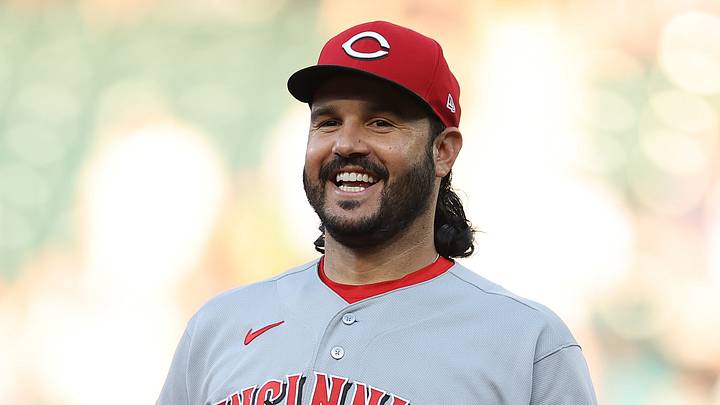
You may have heard by now that Eugenio Suàrez has been absent from the Cincinnati Reds lineup for the past two days. He's off handling some important business, taking the test to become a United States citizen. It's a momentous time in the affable third baseman's life, and something that we can all draw from.
The 35-year-old has accomplished a lot in his big league career. He's crushed 345 homers. He's driven in 1,008 runs. He's made two All-Star teams. He's made over $89 million dollars over his career. Though the 2026 season hasn't gone the way he wanted, the broad smile that has made him universally beloved by peers and fans alike has never left his face.
On the surface, Suàrez isn't like the rest of us. It's very likely that if you're reading this, you're not an elite athlete. You're also not a multimillionaire. You're not a celebrity whom kids idolize, and millions watch on TV and in the stands at Great American Ball Park. But when you peel back the onion a few layers, Geno is very much like the rest of us.
But his origin story isn't like most of ours. A native of Puerto Ordaz, Venezuela, Suàrez was signed by the Detroit Tigers as a teenager for just $10,000. That's essentially the minimum an international amateur prospect receives, and it made him a real long shot to ever get a big league at-bat, much less crush nearly 350 dingers.
In 2011, Suàrez spent some time training at the Tigers facility in Guacara, Venezuela at a time when tensions in the country were high. MLB team academies and the league's presence as a whole were declining at that time.
In 2002, 21 teams had complexes in the country. By 2007, it was down to nine. When 2011 rolled around, only the Tigers and five other teams were left standing in the weary nation. Detroit had imposed a 7:00 p.m. curfew for the players at the facility due to crime in the area. It was a dangerous place for the players and their families.
“I’m just trying to make my dream come true, to make it to the big leagues," a 19-year-old Suarez told the LA Times from the Tigers facility. “Politics goes over my head. I feel enough pressure from the people evaluating me, the pressure to play well.”
Not only was he from a rough-and-tumble neighborhood, but the odds were stacked against him as the talent evaluators didn't think much of his potential beyond offering him the bare minimum. He needed to make the most of every opportunity. He couldn't afford any prolonged slides. The investment was minimal, and the ties were easy to cut.
There's nothing more American than overcoming gigantic obstacles and achieving massive success. That's what Suàrez has done by carving out this kind of distinguished career in a world where even the biggest can't-miss prospects often flop. But the lessons from his story go deeper than that.
Eugenio Suárez's story should inspire hope for Americans, Venezuelans, and even Reds fans
For those with Venezuelan roots, 2026 has been a year of epic highs and saddening lows. Without getting too into the political weeds, the year began with hope after Hugo Chavez's successor, Nicolas Maduro, was removed from power in January. However, the remnants of the despotic regime Maduro headed are still in place, threatening the freedoms and opportunities that have long eluded the Venezuelan people.
Nevertheless, there was also the unbridled joy that Venezuelan's across the world felt as their upstart national team played spoilers and took home the 2026 World Baseball Classic trophy. Geno played an integral role, and his ninth-inning RBI double proved to be the deciding blow to take down Team USA for the title.
However, that wave was cut short in June when dual earthquakes hit Venezuela, taking the lives of over 5,500 people. It was yet another blow for a people who have already had to overcome so much.
This is the part of the story where I break the fourth wall, something I rarely do. See, the Venezuelan people are resilient, and many have the same sort of unending positivity that we see with Suárez.
Before I started writing about baseball full time, I worked near a New York City migrant shelter and interacted with many recent arrivals from Venezuela. After studying Spanish for over a decade, I've become fluent and was often the only one who could assist them with their business when they would come in.
These were people who worked hard, exhausting jobs, yet they always came in with a smile. Those whom I got to know would greet me with a hug, and often they'd bring me a home-cooked meal to show their appreciation. One couple made me flan, which might possibly be the most delicious thing I've ever eaten.
One woman I remember vividly really reminded me of Suárez's attitude. She was a single mother of two who worked the graveyard shift at Wendy's, slept four hours a night, and spent her days cooking, cleaning, and caring for her kids before heading off to English class and then work for the night. If we were busy, she was patient and pleasant, and extended us much more grace than the average native New Yorker.
In a world where we sometimes feel so divided and everything can feel like a challenge, I've admired how those that I've interacted with from Venezuela (and to be clear, this isn't a trait unique to them) always seem to maintain a positive outlook. They take things one step at a time and work hard to build a better future.
Sports is a place where we can go to escape the harsh realities of our day-to-day lives. By no means do I intend to inject those realities into a story about a baseball player. However, sports can bring us together and help us realize that we're more alike than our obvious differences would make it seem.
Growing up as a New York Yankees fan in a suburb of New York, I'm old enough to remember how baseball helped us heal and unite after 9/11. I remember the 2001 World Series and its healing powers. I remember that, even though for me and my fandom it ended in bitter disappointment, there was something oddly satisfying and comforting in seeing the Arizona Diamondbacks, a team that entered the league just three years prior, dethrone the greatest dynasty modern baseball has ever seen. There was something uniquely American about that underdog story.
And that's the point, the story of Suárez's journey. There's something that resonates with the fiber of our being as Americans watching a man come from a land where opportunity basically doesn't exist, overcome tremendous obstacles in his path, and achieve greatness in the process.
Eugenio Suarez will miss his next two games because he's going to take the test that will allow him to become a United States citizen pic.twitter.com/cg4CdIFNAY
— Jomboy Media (@JomboyMedia) September 1, 2026
What we don't always remember is to tackle the challenges with a smile. I know I'm guilty of this at times. In the land of opportunity, it can be easy to forget that we often take for granted something that others spend their lives wishing to obtain. The ability to simply have the opportunity to follow your dreams.
With all of that out of the way, let's get back to the Reds. The 2026 season has felt pretty hopeless, for sure. Wallowing in those bad feelings, though, makes it hard to see what's in front of our faces. The Reds have a tremendous opportunity right in front of them. Few teams in the league have foundational pieces as young, talented, and full of potential as Cincinnati does in Sal Stewart, Chase Burns, and Elly De La Cruz. And few youngsters have the opportunity to learn from a mentor as great as Suárez.
Suárez is living proof that the future can be bright if you're willing to put in the work and attack each day with an unstoppable belief and sense of optimism. If the Reds follow his lead, their future can be bright as well.
Thanks for the lesson, Geno, and congratulations. The Reds media received word that Suárez passed his citizenship test.
 Add us as a preferred source on Google